
In this series we introduce somewhat randomly chosen online curiosities – historical documents or visual materials – that you may explore at your own leisure. These items tie into the themes previously discussed on the OWR, hopefully deepening perspectives and elevating immersion in the topics of the project.
This is the first installment of the Old World Dōngxī -series, where we share some interesting historical sources and knick-knacks to your amusement. Dōngxī here refers to the Chinese word for ‘stuff’ (東西), literally translating to “East-West.” It is thus a fitting name for our attempt to bring together a collection of materials from all cardinal directions.
We hope these miscellaneous sources can kindle some interest or inspiration, and bring the reader closer to the topics of the site. If you have found an interesting primary source yourself – whether it is a document, a picture or a video – feel free to send it to us either via email (which can be found on the ‘About‘ – page) or through social media with a brief introduction. If you’re sharing a file, the work should be in public domain.
Something from Central Asia
Gulliver’s travels in Dungan (1937)
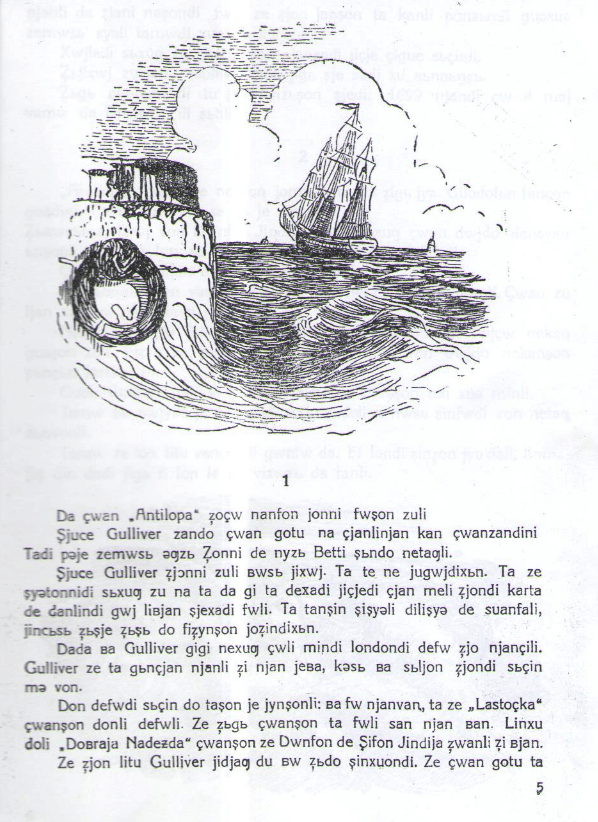
First we have a translation of Gulliver’s travels, a famous novel by Jonathan Swift from 1726, in romanized Dungan. This translation was published in Soviet Kyrgyzstan in 1937. Dungans are an ethnic group in Central Asia who speak a Sinitic language, being descendants of the Hui group in China. While many of the minority languages in the Soviet space tend to use the Cyrillic script, they were still romanized in the 1930s.
Though it is likely that most readers have not seen written Dungan before, this edition is particularly interesting exactly for being written in pre-Cyrillic Dungan, as the Cyrillic script was adopted for the Dungan language only in the 1950s. Before the Soviets banned the Arabic scripts in mid-1920s, Dungan was written in an Arabic script used for Sinitic languages called Xiao’erjing (小兒經).
I’ll credit this finding to Egas Moniz Bandeira.
You can get your copy of the scan here.
Monumental Art of Kazakhstan (1976) [9 mins]
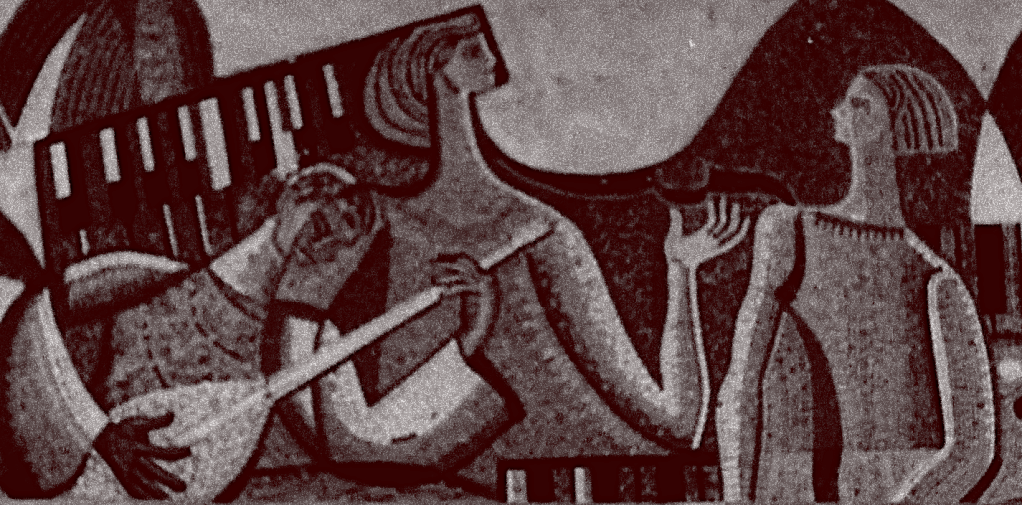
This short documentary from the collections of the Kazakh State Film Archive (TsGARK) invites the viewer on a guided tour of monumental art from around the Kazakh SSR. The film exhibits examples of mosaics, murals, reliefs, stained glass, statues, and memorial complexes in Soviet-era Almaty, Astana, Karaganda, Pavlodar, Shymkent, and Kokchetau. Additionally, the film introduces us to some of the artists behind these works, including members of the Öner Art Combine.
The cine-tour is accompanied first by a funky little tune that helps to create an atmosphere of futurist urban idyll. Electric and jaunty, bodies of flesh and stone dance in front of the camera, producing a kind of choreographed quotidian. However, the future must make way for the past, and so this jingle becomes an anthem by the end. Mosaics give way to Eternal Flames, Hero City plaques, and statues of Soviet and Kazakh Founding Fathers. While the film begins with a celebration of monuments as art, it culminates in an invocation of monuments as technology; monuments as biopolitical antennae.
Monumental Art of Kazakhstan is a concise lesson-object for the curious, showing both what Kazakh SSR looked like and, more importantly, what the filmmaking apparatus wanted “Soviet Kazakhstan” to look like.
For more on the history of mosaic and other monumental art in Kazakhstan, be sure to visit the website of the Monumental Almaty project.
Something from Europe
The Life and Letters of the Right Honourable Friedrich Max Müller (1902)
As an appendix to our article on the philological history of Turanism we have the German philologist Max Müller’s biography as told in his personal letters. The book is an interesting view to the life, views and work of a 19th century academic in rapidly changing Europe.
In the context of our article, in which we presented Müller’s ambitious overview of the “Turanian” languages, I would like to particularly highlight the chapter concerning the years 1854-1855. Here we see his reaction to the outbreak of the Crimean War, as well as insights into the assignment given by the Sir Charles Trevelyan that would ultimately result in the Languages of the Seat of War, With a survey of the three families of language, Semitic, Arian and Turanian (1855). This work was intended for the British officers marching into the “northern divisions of the Turkish empire,” a region which Müller calls “a real linguistic rookery.” Sir Charles, who was at the time the Assistant-Secretary to the Treasury, sets the following demands to the project:
I have only two further suggestions to make, (i) That whatever you do should be done quickly. Every part of this great effort is under war pressure. (2) That you
should tell us at once what you know now leaving the rest to be perfected hereafter.’
If you’re interested in seeing the result of this war-bound linguistic survey, you can find the Languages of the Seat of War here. The letters in full can be found here.
DEREVO (2017) [6 mins]
DEREVO is a short “found footage film” which combines archived amateur footage from the 1970s (shot by Victor Kyzyma) with new editing (Oleg Chorny and Gennadiy Khmaruk), new music (Oleksiy Mikryukov), and new sound design (Andriy Ryzhov).
Oleg Chorny describes the film as:
“[telling] the story of a craftsman’s creativity and his connection to a tree that extracts an invisible form from a material substance. The act of creating by a human being is subject to the power of the substance that governs the carver independently determining the result.”
Materiality is the overarching theme of DEREVO, and the film explores that theme on both its narrative and metanarrative axes. As the viewer will quickly notice, the “film material”, that is Kyzyma’s film from the 1970’s which was subjected to artistic transformation in the 2010’s, is badly damaged. The Kyzyna’s 16mm celluloid was “completely destroyed by lime”–that is until it was restored by the Lviv Center for Urban History. In its current state, as a kind of exquisite corpse of ghostly, semi-legible images, the film’s materiality is laid fully bare.
Using a visual language that rhymes with those of like Bill Morrison and Chris Marker, DEREVO invites its audience to ponder the future histories of their own amateur images. How “material” are the contents of a phone’s photo galleries? What will happen to that media when its artist is gone? Might they find their ways into some similar kind of ensouled artistic remix? Or, will they be the sludge in the gullets of ever-hungrier slop machines?
Chorny ends his description of DEREVO by stating that the film exemplifies how “images and memory are absorbed and disappear behind the veil”, but what are the terms of that disappearance, and how permanent is it?
For more audiovisual material from the Lviv Center for Urban History, check out their Urban Media Archive. Also, check out re/visions “an online-journal of ideas and culture based in Ukraine, Europe, and open to the world”.
 The Old World Review
Leave a comment